Resource Library

Vaccine hesitancy in the U.S. didn’t begin with the uproar over the mRNA vaccines for Covid-19. Debates over vaccine safety and mandatory vaccination have been proxies for existential concerns about justice and morality for decades, and vaccine hesitancy in the U.S. should be understood as religious expression—not as the product of scientific misinformation.
Through a series of historical case studies, which range from the “mother warriors,” who claimed a link between the MMR vaccine and autism during the 1990s, to opposition to masking and vaccines during the Covid-19 pandemic, this book frames vaccination controversies as contests over religious freedom and moral authority. These debates concerned bodily, spiritual, and sexual purity; the morality of state-mandated medical risk; the importance of children; and the authority of parents and doctors.
Diverse groups of Americans have utilized religious ideals and practices to question or resist vaccination. This book offers a novel and even-handed way to understand Americans’ changing and increasingly divided attitudes toward biomedical knowledge and technology through an accessible set of tools for how to “think with religion” when it comes to contemporary contests over medical authority.
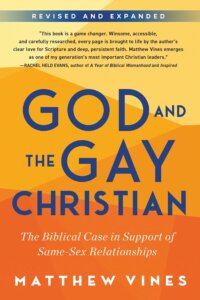
As a young Christian man, Matthew Vines harbored the same basic hopes of many young people: to one day share his life with someone, to build a family of his own, to give and receive love. But when Vines realized he was gay, those hopes were called into question. The Bible, he’d been taught, condemned gay relationships.
Feeling the tension between his understanding of the Bible and the reality of his same-sex orientation, Vines devoted years to intensive research into what the Bible says about homosexuality. He asked questions such as:
• What was the real sin of Sodom?
• What did Paul have in mind when he wrote about same-sex relations?
• Is mandatory celibacy biblical?
• Can same-sex marriage fulfill Scripture’s vision for marriage?
Through accessible writing and carefully constructed arguments, Vines shows readers how affirming same-sex relationships can go hand in hand with maintaining moral boundaries and upholding an orthodox Christian faith.
Scope: This bibliography provides research literature covering a wide variety of topics related to the abuse of children within religious institutions. Various faiths and religious identities are included.
Organization: Publications include articles, book chapters, reports, and research briefs and are listed in date descending order. Links are provided to full text publications when possible. However, this collection may not be complete. More information can be obtained in the Child Abuse Library Online.
Disclaimer: This bibliography was prepared by the Digital Information Librarians of the National Children’s Advocacy Center (NCAC) for the purpose of research and education, and for the convenience of our readers. The NCAC is not responsible for the availability or content of cited resources. The NCAC does not endorse, warrant or guarantee the information, products, or services described or offered by the authors or organizations whose publications are cited in this bibliography. The NCAC does not warrant or assume any legal liability or responsibility for the accuracy, completeness, or usefulness of any information, apparatus, product, or process disclosed in documents cited here. Points of view presented in cited resources are those of the authors, and do not necessarily coincide with those of the NCAC.
This book celebrates survivors who emerged from the shadows of imposed shame to challenge cultures of oppression and institutions of power. Since the year 2000, millions have mobilized a powerful social-justice movement that has flourished as a social and political force that has created hundreds of organizations and compelled reforms in law, social relations, and culture.
Author Tim Lennon shares the obstacles, victories, and courage of the survivors who stepped forward and shattered the silence. Drawing on history, analysis, and exclusive interviews, Lennon demonstrates how survivors have challenged institutions of power, including Hollywood producers, church ministers, athletic coaches, doctors, and many others. They have ignited a movement to end the violence that has plagued society for generations.
When your child reveals that he or she is attracted to the same sex, how you respond may have a lot to do with your faith. Doesn’t the Bible say that’s wrong? Will we have to leave our church? Worst of all, you may wonder, “Do I have to choose between my Christian faith and my child?”
Susan Cottrell is a mom who has been there and wants you to know that loving and accepting your gay child does not mean abandoning or even compromising your faith. This is not a book about the politics or morality of homosexuality. This is a book about how to respond with love and support during this vulnerable time for your child. With practical advice and heartfelt encouragement, Cottrell guides readers through the fear and uncertainty Christian parents of LGBTQ children often feel.
Ten years of research, as well as relationships with thousands of gay, lesbian, bisexual, and transgender people, led to answering important questions: How did history, culture, science, and politics intertwine to create social discrimination against the gay and transgender communities?
Baldock carefully constructs a historical timeline narrative as she untangles the details of various influences and influencers. Along the way, she shares fascinating stories and testimonies enriching the journey. Finally, for those who are wondering how they might enter into productive and respectful conversations about the intersection of faith and sexual orientation or gender identity, this book offers the resources and tools needed to make informed, wise, and Christ-centered choices. This book has a companion Discussion Guide intended for personal, group, or Bible study use.
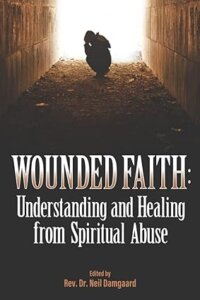
This collection of essays has two audiences in mind: recovering victims and the religious community at large. While is was written as an aid to help victims who are grappling with their faith, the book also seeks to clarify the meaning of spiritual abuse and instruct religious communities on how to effectively welcome victims of spiritual abuse. The book’s contributors come from a background in Christianity and have each, in their own way, experienced spiritual abuse. Here they attempt to dispel commonly held misconceptions, to elucidate the circumstances in which spiritually abused individuals often find themselves, and to implore leaders in communities of faith to shine a light on this harmful, not uncommon offense.
Contributors: Harold L. Bussell, D.Min.; Ray Connolly; Neil Damgaard, D.Min.; Doug Duncan, M.S.; Wendy Duncan, M.A.; Kenneth Garrett, D.Min.; Maureen Griffo, M.A.; Heidi I. Knapp; Patrick J. Knapp, Ph.D.; Michael D. Langone, Ph.D.; Judy Pardon, M.Ed.; Diana Pletts, M.A.; and Eric K. Sweitzer, Ph.D.
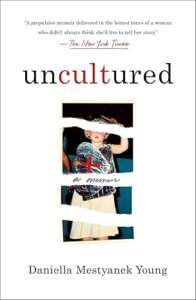
Behind the tall, foreboding gates of a commune in Brazil, Daniella Mestyanek Young was raised in the religious cult the Children of God, also known as The Family, as the daughter of high-ranking members. Beholden to The Family’s strict rules, Daniella suffered physical, emotional, and sexual abuse—masked as godly discipline and divine love—and was forbidden from getting a traditional education.
At fifteen years old, fed up with The Family and determined to build a better and freer life for herself, Daniella escaped to Texas, bravely enrolled herself in high school, and excelled. She later elected to join the military, where she believed she would finally belong. But she soon learned that her new world—surrounded by men on the sands of Afghanistan—was remarkably similar to the one she desperately tried to leave behind.
Told in a beautiful, propulsive voice and with clear-eyed honesty, Uncultured explores the dangers unleashed when harmful group mentality goes unrecognized, and is emblematic of the many ways women have to
contort themselves to survive.
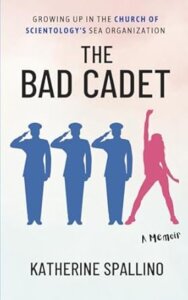
“The Bad Cadet is the shocking and highly engaging account of a child’s life in Scientology. Katherine’s parents signed a billion year contract, putting aside all of their rights, to serve in Scientology’s Sea Organization. They also signed away Katherine’s rights at birth, tricked into believing that they were saving humanity. Katherine and her siblings grew up without parents, shipped away to a ranch run on military lines, without proper care or education, where they were taught to adulate Scientology’s fabulist creator Ron Hubbard, and forced into child labor. This poignant account is made even more remarkable by Katherine’s lack of bitterness and her eye for detail in a sequence of compelling events. She shows that even her indomitable spirit was almost cowed into belief in the bizarre ideas of Scientology’s narcissistic founder. Every reader will find this well-written book fascinating, but it will be especially useful to survivors of childhoods in authoritarian cults. I cannot recommend it highly enough.”
– Jon Atack, author of the best-selling history Let’s Sell These People a Piece of Blue Sky:Scientology, The Cult of Greed and Opening Our Minds: Avoiding Abusive Relationships and Authoritarian Groups
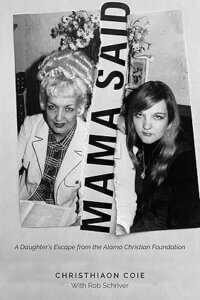
This book is written from a unique angle—what the daughter of a cult leader could see from the inside.
Christhiaon Coie grew up “Little Susie,” the daughter of Susan Alamo and stepdaughter of Tony Alamo, founders of the Alamo Christian Foundation. Coie continued to embrace the faith as she got older, but she was not a little girl anymore and began to realize that people don’t go to church and leave with the offering. She did not embrace the “faith” her mother was peddling, and she saw the financial grift that exploited the vulnerable followers. This is a story about the complex, unremitting relationship between a daughter and her abusive mother. Coie shares insight into Susan Alamo before her foundation days and reveals what it was like to grow up as her daughter between the 1950s and early 1970s. Across thirty-six chapters, she chronicles life within the Alamo cult and the twisted mother-daughter dynamic that persisted through it all. As Coie’s story unfolds, we see Little Susie transform into Christhiaon, navigating a manipulative mother and the distorted biblical teachings enlisted to her cause.
With a foreword from noted Alamo cult historian Debby Schriver, this gritty memoir is a true survivor story. What she survived, however, was not the cult only but the cruel double bind of what “mama said.”
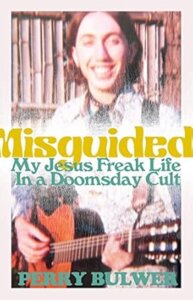
A unique first-hand account of a life spent in the Children of God, a/k/a The Family, a millenarian doomsday sex cult under the sway of a charismatic leader, David Berg.
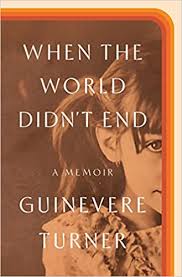
Guinevere did not understand that her family was a cult. She spent most of her days on a compound in Kansas, living apart from her mother with dozens of other children who worked in the sorghum fields and roved freely through the surrounding pastures, eating mulberries and tending to farm animals. But there was a dark side to this bucolic existence. Guinevere was part of the Lyman Family, a secluded cult spearheaded by Mel Lyman, a self-proclaimed savior, committed to isolation from a World he declared had lost its way. When Guinevere caught the attention of Jessie, the woman everyone in the Family called the Queen, her status was elevated—suddenly she was traveling with the inner circle among communities in Los Angeles, Boston, and Martha’s Vineyard.
But before long, the life Guinevere had known ended. Her mother, from whom she had been separated since age three, left the Family with another disgraced member, and Guinevere and her four-year-old sister were forced to leave with them. Traveling outside the bounds of her cloistered existence, Guinevere was thrust into public school for the first time, a stranger in a strange land wearing homemade clothes, and clueless about social codes. Now out in the World she’d been raised to believe was evil, she faced challenges and horrors she couldn’t have imagined.
Drawing from the diaries that she kept throughout her youth, Guinevere Turner’s memoir is an intimate and heart-wrenching chronicle of a childhood touched with extraordinary beauty and unfathomable ugliness, the ache of yearning to return to a lost home—and the slow realization of how harmful that place really was.
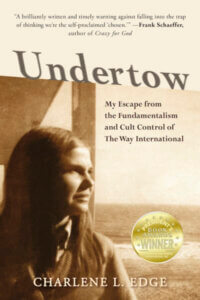
In the beginning, Edge writes, “I only wanted to know, love, and serve God and understand the Bible. What harm could that possibly bring?”
After a personal tragedy left her bereft, teenaged Charlene turned away from family and friends and fell into the clutches of The Way International, a small sect led by the charismatic Victor Paul Wierwille. The Way—which eventually became one of the largest cults in America—held Charlene in its grip for seventeen years before she escaped.
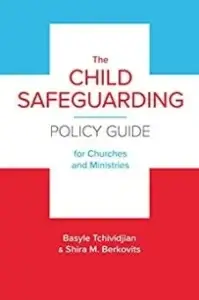
Churches are supposed to be a safe haven, but many deal with the tragic reality of child sexual abuse. This handbook, written by a multidisciplinary team of child abuse experts, helps churches and faith communities formulate policies and procedures to protect children and address possible abuse in their ministries.
Dr. Laura Anderson draws on her training as a trauma therapist, scientific research, and personal experiences of growing up in a high demand/high control religious system and resolving the trauma that resulted, to offer hope for what life can be after deconstructing and/or deconverting from one’s faith.
She challenges the cultural beliefs suggesting bad church experiences are simply a result of sinful humans and instead helps the reader recognize how messaging, beliefs, and practices present in high demand/high control religions can have a multi-dimensional impact, creating the need for healing to happen in multiple dimensions as well.
Instead of viewing healing as an end point which someone arrives at and is done healing, Laura offers that healing is an ongoing process that encompasses every moment and aspect of life. Using a blend of real-life examples and research, this book provides education while inspiring hope that reclaiming life after adverse religious experiences and/or religious trauma is both possible and is already happening in the day-to-day moments of life.

A very deep dive into an often harmful movement driven by evangelical Christianity.
Stefan Merrill Block was nine when his mother pulled him from school, certain that his teachers were “stifling his creativity.” Hungry for more time with her boy who was growing up too quickly, she began to instruct Stefan in the family’s living room. Beyond his formal lessons in math, however, Stefan was largely left to his own devices and his mother’s erratic whims, such as her project to recapture her twelve-year-old son’s early years by bleaching his hair and putting him on a crawling regimen.
In this “stunning debut memoir” (Jenna Bush Hager, The Today Show), Block beautifully reflects on his experiences in both traditional and at-home education systems, delving into:
- The inception of the homeschooling movement and its massive rise throughout America
- Early memories of Block’s mother, and a poignant look into their dysfunctional mother-son story
- Block’s reentry into the public school system, both jarring yet insightful, and the bullying he withstood
- His emotional journey towards forgiveness, love, and hope as he becomes a parent himself
At once a novelistic portrait of mother and son, and an illuminating window into an overlooked corner of the American education system, Homeschooled is a moving, funny and ultimately inspiring story of a son’s battle for a life of his own choosing, and the wages of a mother’s insatiable love.
While many families homeschool responsibly, abuse and neglect do occur in homeschooling environments. Since 2013, the Coalition for Responsible Home Education has maintained Homeschooling’s Invisible Children (HIC): a database of severe, often fatal incidents of child abuse and neglect that occur in homeschool settings. The data we have collected illuminate how abusive caregivers are able to use homeschooling to conceal and escalate their abuse. We have found, furthermore, that homeschool oversight policies are rarely effective at identifying that abuse is taking place, much less at stopping it.
The contributors to this harrowing collection of firsthand accounts of conversion therapy “were subjected to dehumanizing practices that sought their erasure,” writes editor Wilson, a former evangelical who is himself a survivor of conversion therapy. Labeled as suffering from “rapid-onset gender dysphoria,” contributors were told they had caught “a social contagion”—or, in some cases, been possessed by a demon. Forced to participate in horrid “therapies” that ranged from ridiculous aversion exercises (collecting dog feces and smelling it while looking at pictures of people of the same sex to induce vomiting) to torturous onstage “cleansings” during which they were violently restrained, the contributors report that they suffered a damaged sense of self, many to the point of suicidal ideation and suicide attempts. Many of the stories exemplify how conversion therapy is a mental torture so strong that it has ramifications on the physical health of those subjected to it .
– Publishers Weekly