Religion should never justify the maltreatment of a child.

But it often does.
That’s why we’re here.

Religious Child Maltreatment Happens in All Faiths

Our map is the only comprehensive source of reported incidents of religious child maltreatment in the U.S. across all faiths and belief systems. This tool is an essential contribution to child welfare. Statistics on child abuse in the U.S. are plentiful, but no research or data sets have narrowed the focus solely on religious settings—until now.

And we need your help.

WHAT IS RELIGIOUS CHILD MALTREATMENT?

Religious Child Maltreatment occurs when religious belief, doctrine, or practice are used to justify abuse or neglect of a child.

CHILD ABUSE IS ALREADY AGAINST THE LAW, SO WHY IS THIS A PROBLEM?

In the United States, many laws exist specifically to protect children from harm like physical abuse, sexual assault, medical neglect, and even educational neglect by not sending your child to school. These are just a few obvious examples.

What’s not obvious is that many religious individuals and organizations—in both red and blue states—are exempt from prosecution if their actions defy those laws. In other words, if the harm is inherent to a religious tradition, if it takes place in a religious setting, or if it occurs on property owned by a religious organization, the law may allow it.

This is wrong. Child abuse is always harmful, so it should always be forbidden. But it’s not. Religiously justified harm will continue to be accommodated unless laws that protect children apply to everyone.

ARE CHILDREN NOT RAISED IN RELIGION AT RISK?

YES! And that’s why we’re here. Our mission is to raise awareness of just how common Religious Child Maltreatment is, and just how vulnerable any child or family can be.

Latest Articles

The homophobic teachings of the Mormon church killed my son

When Brian Bresee became a father, he was a sixth-generation Mormon who believed that the Church of Jesus Christ of Latter-day Saints was a good faith tradition and environment in which to raise children. But when his 14-year-old son took his own life, Brian began to scrutinize the church’s teachings and practices. It was a journey that led him to a painful realization about the role the Mormon church played in his son’s death and perhaps the deaths of other LDS teens.

Our Mission

We are dedicated to raising awareness of how religious influence works to undermine laws that exist to protect children.

This occurs at all levels of government in the form of “religious exemptions” that create ironclad loopholes favoring religious belief over the health, safety, and well-being of young people.

Resource Library

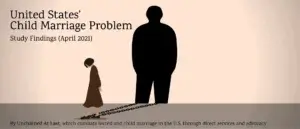
United States’ Child Marriage Problem

Unchained At Last
Presentations

Child marriage, or marriage before age 18, has devastating implications for underage girls. Yet between 2000 and 2018, nearly 300,000 minors were legally married in the U.S.
This report, published in 2021, details the dangerous implications of child marriage, legislative failures at state and federal levels, and concludes with a simple solution: commonsense legislation to end any loophole that allows a minor to be married.
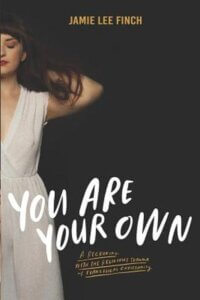
You Are Your Own: A Reckoning with the Religious Trauma of Evangelical Christianity

Jamie Lee Finch
Books

Rooted in her experiences growing up in an Evangelical Christian family, Jamie Lee Finch’s “You Are Your Own” offers an overview of Evangelicalism and the painful confusion and anxiety experienced under its demands. Finch explores the mechanisms of trauma and how fundamentalist denominations match the patterns connected with PTSD. She elaborates on the doubt, guilt, fear, and grief that haunt those leaving the Evangelical faith and offers an approach to help them recover healthy self-worth and resilience. A socio-historical autobiographical analysis of Evangelical Christianity’s religious trauma, “You Are Your Own” emerges from Finch’s reconnaissance on her own life—her journals, her stories, her trauma—and offers advocacy for everyone harmed by fundamentalist faith. Jamie Lee Finch is a sexuality and embodiment coach, intuitive healer, self-conversation facilitator, sex witch, and poet. You can learn about Jamie’s work at JamieLeeFinch.com

Toxic Theology as a Contributing Factor in Complicated Mourning

Terri Daniel
Academic Research

As an educator and spiritual caregiver to the bereaved, Terri Daniel, DMin, offers supportive companionship and spiritual healing tools for the grief journey. In this capacity, she has encountered certain theological mindsets that can disrupt psychological well-being, and in some cases lead to complicated mourning, depression, and even illness. This paper explores these “toxic theologies” and their relationship to complicated mourning while offering alternative perspectives and cosmologies that may be helpful in supporting grievers who face spiritual challenges.

Childhood Spiritual Trauma

Terri Daniel
Academic Research

In this paper, Terri Daniel, DMin, references the book “Breaking Their Will” by CFFP founder, Janet Heimlich. The paper was part of Daniel’s doctoral coursework at San Francisco Theological Seminary.

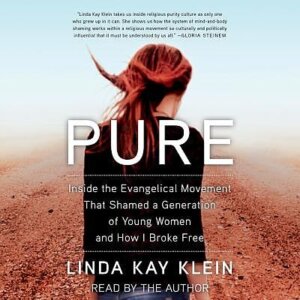
Pure: Inside the Evangelical Movement That Shamed a Generation of Young Women and How I Broke Free

Linda Kay Klein
Books

In the 1990s, a “purity industry” emerged out of the white evangelical Christian culture. Purity rings, purity pledges, and purity balls came with a dangerous message: girls are potential sexual “stumbling blocks” for boys and men, and any expression of a girl’s sexuality could reflect the corruption of her character. This message traumatized many girls, resulting in anxiety, fear, and experiences that mimicked the symptoms of Post-Traumatic Stress Disorder and trapped them in a cycle of shame.

When the youth pastor of her church was convicted of sexual enticement of a 12-year-old girl, Klein began to question purity-based sexual ethics. She contacted young women she knew, asking if they were coping with the same shame-induced issues she was. These intimate conversations developed into a 12-year quest that took her across the country and into the lives of women raised in similar religious communities. It was a journey that facilitated her own healing and led her to churches that are seeking a new way to reconcile sexuality and spirituality.