
Religion should never justify the maltreatment of a child

But it often does.
That’s why we’re here.

Our Mission

We are dedicated to raising awareness of how religious influence works to undermine laws that exist to protect children.

This occurs at all levels of government in the form of “religious exemptions” that create ironclad loopholes favoring religious belief over the health, safety, and well-being of young people.

WHAT IS RELIGIOUS CHILD MALTREATMENT?

Religious Child Maltreatment occurs when religious belief, doctrine, or practice are used to justify abuse or neglect of a child.

CHILD ABUSE IS ALREADY AGAINST THE LAW, SO WHY IS THIS A PROBLEM?

In the United States, many laws exist specifically to protect children from harm like physical abuse, sexual assault, medical neglect, and even educational neglect by not sending your child to school. These are just a few obvious examples.

What’s not obvious is that many religious individuals and organizations—in both red and blue states—are exempt from prosecution if their actions defy those laws. In other words, if the harm is inherent to a religious tradition, if it takes place in a religious setting, or if it occurs on property owned by a religious organization, the law may allow it.

This is wrong. Child abuse is always harmful, so it should always be forbidden. But it’s not. Religiously justified harm will continue to be accommodated unless laws that protect children apply to everyone.

ARE CHILDREN NOT RAISED IN RELIGION AT RISK?

YES! And that’s why we’re here. Our mission is to raise awareness of just how common Religious Child Maltreatment is, and just how vulnerable any child or family can be.

Religious Child Maltreatment Happens in All Faiths

Statistics on child abuse in the U.S. are plentiful, but no research or data sets have narrowed the focus solely on religious settings.

Until now.

We’re in the process of creating an interactive heat map that will filter data by geographic metrics. It will be the only comprehensive source of reported incidents of religious child maltreatment across all faiths and belief systems in the U.S. This tool will be an essential contribution to child welfare.

COMING  SOON

Blog

The homophobic teachings of the Mormon church killed my son

When Brian Bresee became a father, he was a sixth-generation Mormon who believed that the Church of Jesus Christ of Latter-day Saints was a good faith tradition and environment in which to raise children. But when his 14-year-old son took his own life, Brian began to scrutinize the church’s teachings and practices. It was a journey that led him to a painful realization about the role the Mormon church played in his son’s death and perhaps the deaths of other LDS teens.

Resource Library

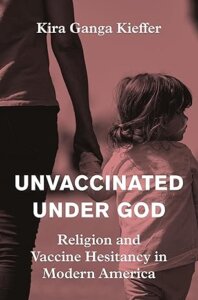
Unvaccinated Under God: Religion and Vaccine Hesitancy in Modern America

2026 Kira Ganga Kieffer, Ph.D.
Books, Academic Research

Vaccine hesitancy in the U.S. didn’t begin with the uproar over the mRNA vaccines for Covid-19. Debates over vaccine safety and mandatory vaccination have been proxies for existential concerns about justice and morality for decades, and vaccine hesitancy in the U.S. should be understood as religious expression—not as the product of scientific misinformation.

Through a series of historical case studies, which range from the “mother warriors,” who claimed a link between the MMR vaccine and autism during the 1990s, to opposition to masking and vaccines during the Covid-19 pandemic, this book frames vaccination controversies as contests over religious freedom and moral authority. These debates concerned bodily, spiritual, and sexual purity; the morality of state-mandated medical risk; the importance of children; and the authority of parents and doctors.

Diverse groups of Americans have utilized religious ideals and practices to question or resist vaccination. This book offers a novel and even-handed way to understand Americans’ changing and increasingly divided attitudes toward biomedical knowledge and technology through an accessible set of tools for how to “think with religion” when it comes to contemporary contests over medical authority.
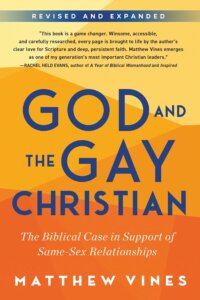
God and the Gay Christian: The Biblical Case in Support of Same-Sex Relationships

2025 Matthew Vines
Books

As a young Christian man, Matthew Vines harbored the same basic hopes of many young people: to one day share his life with someone, to build a family of his own, to give and receive love. But when Vines realized he was gay, those hopes were called into question. The Bible, he’d been taught, condemned gay relationships.

Feeling the tension between his understanding of the Bible and the reality of his same-sex orientation, Vines devoted years to intensive research into what the Bible says about homosexuality. He asked questions such as:

• What was the real sin of Sodom?
• What did Paul have in mind when he wrote about same-sex relations?
• Is mandatory celibacy biblical?
• Can same-sex marriage fulfill Scripture’s vision for marriage?

Through accessible writing and carefully constructed arguments, Vines shows readers how affirming same-sex relationships can go hand in hand with maintaining moral boundaries and upholding an orthodox Christian faith.

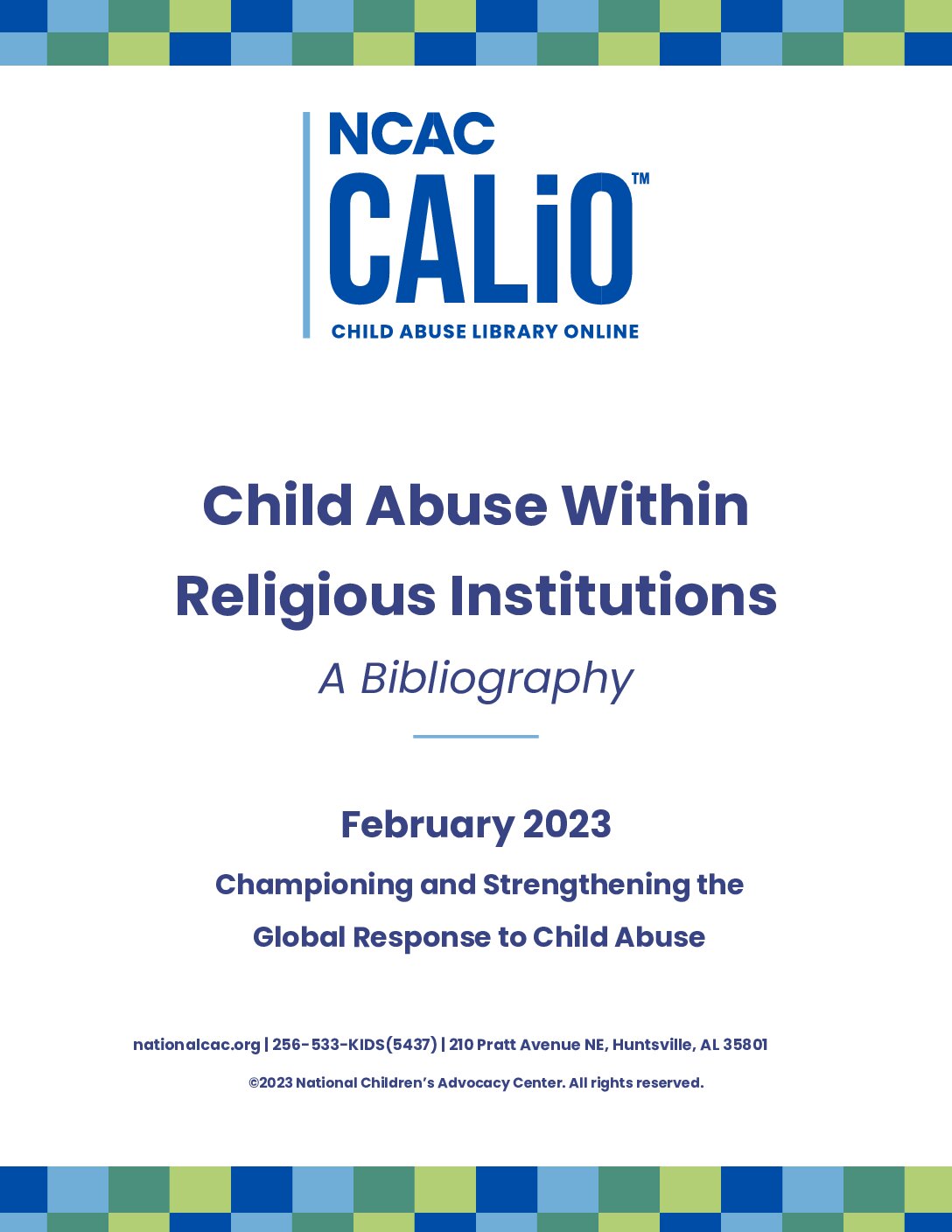
Child Abuse Within Religious Organizations: A Bibliography

2023 National Children's Advocacy Center
Academic Research

Scope: This bibliography provides research literature covering a wide variety of topics related to the abuse of children within religious institutions. Various faiths and religious identities are included.

Organization: Publications include articles, book chapters, reports, and research briefs and are listed in date descending order. Links are provided to full text publications when possible. However, this collection may not be complete. More information can be obtained in the Child Abuse Library Online.

Disclaimer: This bibliography was prepared by the Digital Information Librarians of the National Children’s Advocacy Center (NCAC) for the purpose of research and education, and for the convenience of our readers. The NCAC is not responsible for the availability or content of cited resources. The NCAC does not endorse, warrant or guarantee the information, products, or services described or offered by the authors or organizations whose publications are cited in this bibliography. The NCAC does not warrant or assume any legal liability or responsibility for the accuracy, completeness, or usefulness of any information, apparatus, product, or process disclosed in documents cited here. Points of view presented in cited resources are those of the authors, and do not necessarily coincide with those of the NCAC.

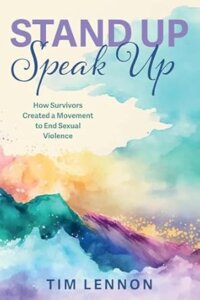
Stand Up Speak Up: How Survivors Created a Movement to End Sexual Violence

2025 Tim Lennon
Books

This book celebrates survivors who emerged from the shadows of imposed shame to challenge cultures of oppression and institutions of power. Since the year 2000, millions have mobilized a powerful social-justice movement that has flourished as a social and political force that has created hundreds of organizations and compelled reforms in law, social relations, and culture.

Author Tim Lennon shares the obstacles, victories, and courage of the survivors who stepped forward and shattered the silence. Drawing on history, analysis, and exclusive interviews, Lennon demonstrates how survivors have challenged institutions of power, including Hollywood producers, church ministers, athletic coaches, doctors, and many others. They have ignited a movement to end the violence that has plagued society for generations.

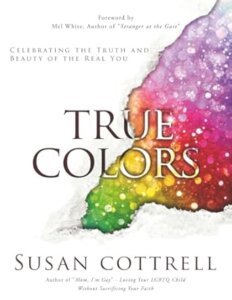
True Colors: Celebrating the Truth and Beauty of the Real You

2025 Susan Cottrell
Books
From the author of “Mom, I’m Gay”: Loving Your LGBTQ Child Without Sacrificing Your Faith comes this workbook to help heal from parent, family, church, and community wounds.
“For anyone who has been spiritually hurt by the church, parents, or family members, True Colors is a personal, intimate, powerful tool for genuine self-healing.”
– Meghan Stabler, National Board of Directors, The Human Rights Campaign
“You can almost hear Susan whispering between the lines ‘God loves you exactly as you are. Quit being afraid. Quit hiding. Love yourself as God loves you. Begin your new life as a self-loving LGBTQ person and let the healing begin.'”
– Dr. Mel White, author of Stranger at the Gate