Resource Library
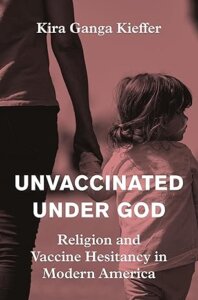
Vaccine hesitancy in the U.S. didn’t begin with the uproar over the mRNA vaccines for Covid-19. Debates over vaccine safety and mandatory vaccination have been proxies for existential concerns about justice and morality for decades, and vaccine hesitancy in the U.S. should be understood as religious expression—not as the product of scientific misinformation.
Through a series of historical case studies, which range from the “mother warriors,” who claimed a link between the MMR vaccine and autism during the 1990s, to opposition to masking and vaccines during the Covid-19 pandemic, this book frames vaccination controversies as contests over religious freedom and moral authority. These debates concerned bodily, spiritual, and sexual purity; the morality of state-mandated medical risk; the importance of children; and the authority of parents and doctors.
Diverse groups of Americans have utilized religious ideals and practices to question or resist vaccination. This book offers a novel and even-handed way to understand Americans’ changing and increasingly divided attitudes toward biomedical knowledge and technology through an accessible set of tools for how to “think with religion” when it comes to contemporary contests over medical authority.
Scope: This bibliography provides research literature covering a wide variety of topics related to the abuse of children within religious institutions. Various faiths and religious identities are included.
Organization: Publications include articles, book chapters, reports, and research briefs and are listed in date descending order. Links are provided to full text publications when possible. However, this collection may not be complete. More information can be obtained in the Child Abuse Library Online.
Disclaimer: This bibliography was prepared by the Digital Information Librarians of the National Children’s Advocacy Center (NCAC) for the purpose of research and education, and for the convenience of our readers. The NCAC is not responsible for the availability or content of cited resources. The NCAC does not endorse, warrant or guarantee the information, products, or services described or offered by the authors or organizations whose publications are cited in this bibliography. The NCAC does not warrant or assume any legal liability or responsibility for the accuracy, completeness, or usefulness of any information, apparatus, product, or process disclosed in documents cited here. Points of view presented in cited resources are those of the authors, and do not necessarily coincide with those of the NCAC.
This article examines the psychological, emotional, and developmental impact on children who are born into or raised within cultic or high-demand groups. Drawing on clinical literature, survivor accounts, and developmental theory, it argues that cults function as totalizing social systems that profoundly distort normal family structures, identity formation, and emotional growth. Unlike adult converts, children have no precult reference point, making them uniquely vulnerable to control, abuse, and developmental harm. The article also explores the complex challenges second-generation members face when leaving and recovering from these environments.
A substantial minority of Americans have religious beliefs against one or more medical treatments. Some groups promote exclusive reliance on prayer and ritual for healing nearly all diseases. Jehovah’s Witnesses oppose blood transfusions. Hundreds of thousands of schoolchildren have religious or conscientious exemptions from immunizations. Such exemptions have led to personal medical risk, decreases in herd immunity, and outbreaks of preventable disease. Though First Amendment protections for religious freedom do not include a right to neglect a child, many states have enacted laws allowing religious objectors to withhold preventive, screening, and, in some states, therapeutic medical care from children. Religious exemptions from child health and safety laws should be repealed so that children have equal rights to medical care.

This doctoral dissertation offers quantitative evidence about the BITE model (Behavior, Information, Thought, and Emotion) as a potential tool to help evaluate cases involving exploitive or undue influence. BITE offers a clearly defined model based on observable behaviors that expert witnesses can use to evaluate the presence of mind control or thought reform across a variety of settings and groups.
In this paper, Terri Daniel, DMin, references the book “Breaking Their Will” by CFFP founder, Janet Heimlich. The paper was part of Daniel’s doctoral coursework at San Francisco Theological Seminary.
As an educator and spiritual caregiver to the bereaved, Terri Daniel, DMin, offers supportive companionship and spiritual healing tools for the grief journey. In this capacity, she has encountered certain theological mindsets that can disrupt psychological well-being, and in some cases lead to complicated mourning, depression, and even illness. This paper explores these “toxic theologies” and their relationship to complicated mourning while offering alternative perspectives and cosmologies that may be helpful in supporting grievers who face spiritual challenges.
An examination of the hypothesis that Conservative Protestants are more likely to physically abuse children than Mainline Protestants, Catholics, or the religiously unaffiliated.
Published in the Journal of Adolescent Health, vol. 69, issue 6, Supplement, S8-S10, Dec. 2021
Child marriage is as damaging in the U.S. as it is across the globe. Minors—even highly mature 17-year-olds—have limited legal rights and therefore can easily be forced into marriage or forced to stay in an unwanted marriage. The data compiled in this study shows how child marriage it as much a human-rights abuse in the U.S. as anywhere else.